
Deixe um recado
Se você está interessado em nossos produtos e deseja saber mais detalhes, deixe uma mensagem aqui, responderemos o mais breve possível.
A PV wall bracket turns a blank building facade, boundary wall or container side into a productive solar mounting surface. Instead of forcing every project onto a roof, wall-mounted hardware holds the modules vertically or at a shallow tilt, transfers the load straight into the structure, and leaves the roof free for other uses. This buying guide explains how a wall bracket works, the advantages it delivers, and the checks that separate a reliable system from an expensive mistake.
For owners of multi-storey buildings, factories and compact residential plots, wall mounted solar is often the only way to add capacity without touching the roof. The hardware is simple, but specifying it correctly is not.
A PV wall bracket is a mechanical assembly that anchors photovoltaic modules to a vertical wall. A complete system normally contains five families of parts:
Because every part works as one load path, a cheap bracket with a strong plate but a weak anchor is no stronger than its weakest fixing. That is why the specification has to be read as a system, not as a list of parts.
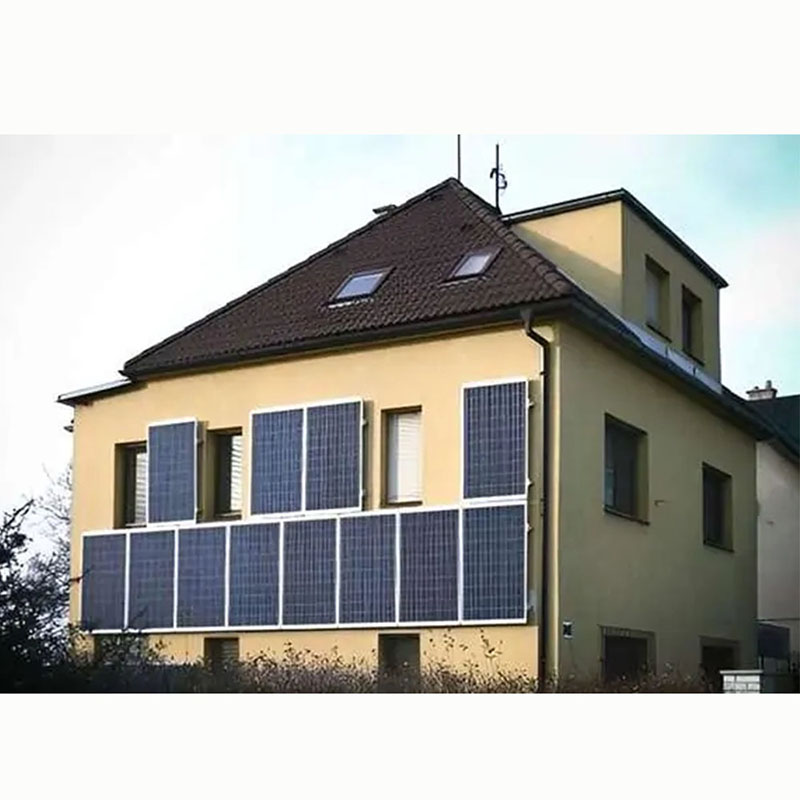
Wall-mounted solar hardware is not a niche accessory. On the right building it outperforms a roof system on cost, access and usable area. These are the advantages buyers ask about most often.
On a multi-storey building the facade area is frequently several times larger than the roof footprint. Factories, warehouses, stair cores and apartment blocks all have long south-facing walls that sit empty all day. A wall bracket converts that surface into generating area without consuming land or casting shade on the roof.
Every roof fixing is a potential leak, and many membrane manufacturers void their waterproofing warranty once a third party drills through the membrane. A facade installation moves the penetration to a vertical wall where water runs off instead of pooling, and it leaves the roof covering completely untouched. For leased buildings and new-build handovers, that alone can decide the project.
Modules mounted near vertical do not hold snow for long, and rain washes dust off the glass instead of leaving it in a film along the lower edge. In dusty industrial areas and snowy regions this self-cleaning behaviour protects yield and cuts maintenance visits. It also means less shading from accumulated debris between rows.
A wall bracket transfers wind and dead load through a short standoff directly into a structural wall, rather than through long rails, purlins and roof trusses. When the substrate is sound, deflection is small, and the array stays flat and rattle-free for years. That stiffness is what protects module frames and glass from fatigue.
Wall arrays can often be reached from the ground with a short ladder or a mobile platform, so a technician does not need roof access, fall-arrest equipment or a crane. Inspections, clamp torque checks and inverter cable tracing take minutes instead of a half-day. Over a 25-year service life, that difference in access cost is substantial.
A well-designed Solar Bracket keeps the array parallel to the wall, with consistent gaps and hidden cabling. The result reads as part of the building envelope rather than an afterthought bolted to it, which matters for planners, architects and brand-conscious commercial owners.
Wall systems use repeated bay spacing, so a two-panel starter array and a 200-panel facade use the same components. If the budget is released in phases, the owner can extend the row later without redesigning the structure or matching obsolete parts.
Most failures are specification failures, not manufacturing failures. Run these six checks before you compare prices.
Cast concrete, aerated block, clay brick, stone cladding, insulated sandwich panels and steel purlins all behave differently under tension. A chemical anchor that is correct for concrete can pull out of a hollow block; a self-drilling screw that suits a steel purlin will crumble a mortar joint. Confirm the substrate, its thickness and its compressive strength before the anchor type is chosen.
Ask for the allowable tension and shear per fixing point, not just a generic panel count. The governing case is usually wind uplift on an exposed facade, which can exceed the dead weight of the array. A practical design keeps a safety factor of at least 1.5 on the governing load and verifies the pull-out capacity in the actual masonry, not in a catalogue table.
Extruded 6005-T5 aluminium with an anodized or mill finish gives a good stiffness-to-weight ratio and will not rust. Fasteners should be A2 or A3 stainless steel, and any contact between dissimilar metals needs an insulating washer to stop galvanic corrosion. Avoid painted mild steel in coastal or industrial atmospheres, where a coating scratch becomes a corrosion point within a season.
Modules lose efficiency as cell temperature rises, so a standoff of roughly 100 to 150 mm is normally worth the extra bracket depth. The gap also lets rain run behind the array, keeps the wall drier, and gives installers room to route cable and reach the clamps.
A flush fixed bracket is cheaper, stronger and almost invisible. An adjustable frame costs more but lets the owner tune the angle for latitude, season or a changing shading pattern. Where winter output matters at higher latitudes, adjustable hardware or a steeper fixed angle pays back quickly. Compare complete solar panel adjustable mounting brackets rather than mixing arms and rails from different systems.
A bracket sold for facade use should come with structural calculations or test reports that state the design wind speed and the assumed safety factor. Anything described only as heavy duty, without a number, is a marketing claim. Check the report against your project's local wind code and the building height
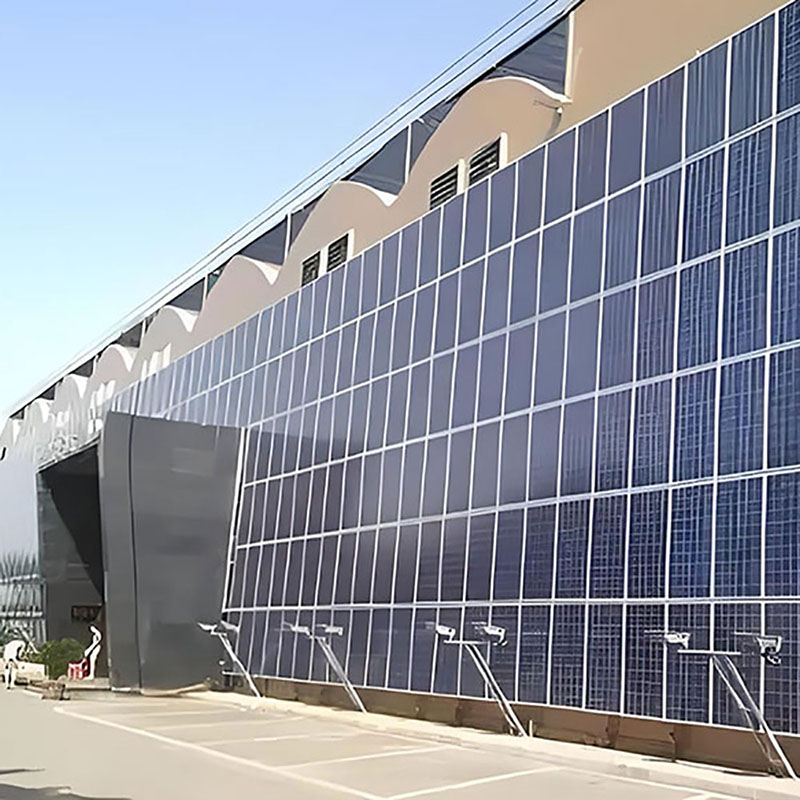
Wall bracket versus roof mount: a roof mount usually offers a better tilt and more square metres, but it needs a sound roof structure, penetrations or ballast, and safe access. The wall option wins where the roof is shaded, occupied by plant, covered by a warranty the owner wants to keep, or simply too small.
Wall bracket versus ground mount: a ground mount is the cheapest way to install a large array when land is available, and it allows an ideal tilt and easy cleaning. The wall option removes the land cost, the fence and the foundation work, which is decisive on urban and industrial sites where open ground does not exist.
When wall mounting is the best answer: south-facing facades with good sun exposure, buildings with limited roof area, temporary or leased structures, container-based equipment, and projects that need to add capacity without touching the roof.
There is no single figure, because the limit belongs to the fixing point and the wall, not to the bracket alone. A typical design is governed by the anchor's pull-out capacity in the specific substrate and by wind uplift rather than by the weight of the module. Ask the supplier for the allowable load per bracket and have the anchor calculated for your wall.
Yes, provided the brick or block is solid enough and the correct anchor is used. Clay brick usually takes a resin or mechanical anchor into the brick body, while hollow block needs a chemical anchor with a screen or a through-bolt into a structural element. Mortar joints are not a fixing point, and a wall that is crumbling or painted over a weak render should be assessed by an engineer first.
A vertical array produces less annually than an optimally tilted one in most climates, but it performs comparatively well in winter at high latitudes and during early morning and late afternoon hours. It also stays cleaner and sheds snow. For facades, the practical answer is to model the specific orientation and compare the yield per square metre of usable wall rather than per installed panel.
The main drivers are the number and type of anchors, the aluminium grade and finish, the standoff depth, whether the tilt is fixed or adjustable, and the wind load the system must resist. Access equipment and wall preparation often cost more than the hardware itself, so a complete installed cost is the only fair comparison between quotes.
A PV wall bracket is a small part of the total project budget but it carries the whole array. Get the substrate, anchor, material and wind load right, and wall-mounted solar becomes one of the most durable and lowest-maintenance ways to add capacity to a building. Get them wrong, and the cheapest bracket turns into the most expensive decision on the job.
Need help specifying a PV wall bracket for a facade, boundary wall or container project? Send us your wall type, module size, wind speed and array layout, and our team will recommend the right bracket, rail and anchor combination with a full bill of materials.
Cadastre-se em nosso boletim informativo para obter informações atualizadas, promoções e insights.


 Rede IPv6 suportada